Disclaimer: This special edition is based on my own views and not the views of my employer.
Thank you to anyone who reads this weekly newsletter!
This will be a short recap of the 2024 LDP presidential election and some key observations from the historic night in which former LDP Secretary General Ishiba Shigeru came out victorious for the first time after four failed attempts.
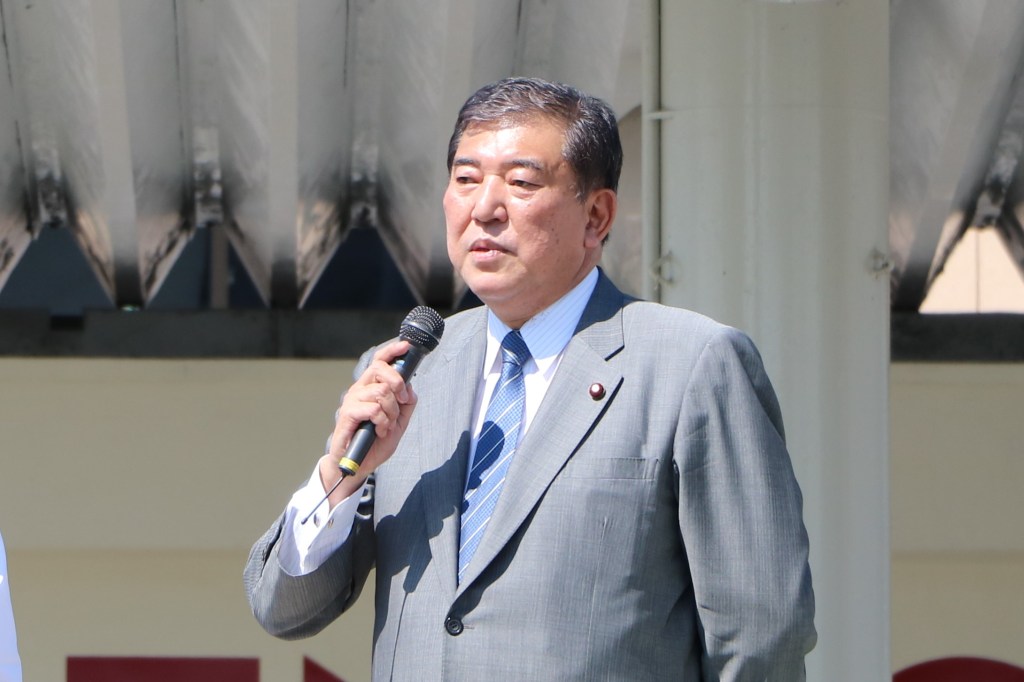
But first a quick bio of Ishiba courtesy of Sankei:
Ishiba Shigeru is a 67-year-old 12-term member of the House of Representatives from Tottori. He graduated from Keio University. He was first elected in 1986 representing the former at-large Tottori district after working in the private sector, including Mitsui Bank. He has served as minister of defense, minister of agriculture, forestry and fisheries, minister in charge of regional revitalization, LDP policy chief, and LDP secretary general.
Results
In the first round, Takaichi Sanae surprisingly finished first above Ishiba Shigeru and Koizumi Shinjiro, finishing above Ishiba in local member votes and coming close to finishing first among Diet members too. Her on-the-ground campaign coupled with a savvy media campaign orchestrated by Ishimaru Shinji’s staff (who managed to get him to finish second in July’s Tokyo gubernatorial race) contributed to the surprise. Meanwhile, Koizumi failed to ride the initial momentum surrounding his campaign, only capturing his home prefecture of Kanagawa in the local member votes and unable to maintain a significant lead among Diet members. His campaign pledges to relax rules around firing employees stoked fears of mass firings, while his push for separate surnames for married couples as a centerpiece of the campaign backfired as conservative voters punished him in the local member vote.
| Candidate | Diet Member Votes | Local Member Votes | Total Votes |
|---|---|---|---|
| Takaichi Sanae | 72 | 109 | 181 |
| Ishiba Shigeru | 46 | 108 | 154 |
| Koizumi Shinjiro | 75 | 61 | 136 |
| Hayashi Yoshimasa | 38 | 27 | 65 |
| Kobayashi Takayuki | 41 | 19 | 60 |
| Motegi Toshimitsu | 34 | 13 | 47 |
| Kamikawa Yoko | 23 | 17 | 40 |
| Kono Taro | 22 | 8 | 30 |
| Kato Katsunobu | 16 | 6 | 22 |
Takaichi’s surprising first place finish heightened the prospects of her becoming the first female prime minister of Japan. However, her seemingly “extreme” views on issues like visiting Yasukuni Shrine as prime minister and rejection of moderate talking points ultimately pushed Diet members to cast more votes for Ishiba, who has historically failed miserably among Diet members given his history of “betrayal” in the party (left party in 1993 while LDP struggled in the aftermath of political scandals; pressured then-Prime Minister Aso Taro to resign despite being a member of his Cabinet).
It seems a combination of Diet members concerned about survival in the upcoming Lower House and Upper House elections and moderate Diet members came together to deny Takaichi a victory. It also helped that while Ishiba had lost the popular vote to Takaichi, he had captured 26 of the 47 prefectures in the first round, which automatically gave him a five point lead in the run-off. In that sense, Ishiba won not because more Diet members believed in his policy vision, but because he was viewed as the “safer choice” and the status quo candidate compared to Takaichi, who has considerable political baggage due to her ties to the Abe faction and was viewed as having the potential of taking policies in a riskier direction.
| Candidate | Diet Member Votes | Prefectural Votes | Total Votes |
|---|---|---|---|
| Takaichi Sanae | 173 | 21 | 194 |
| Ishiba Shigeru | 189 | 26 | 215 |
Quick Observations
- Ishiba was viewed as the “safest choice” of the top three candidates. Takaichi would have been a risky choice as the face of the party heading into the general election for reasons stated above. Koizumi would have been exposed for his inexperience and possibly give an opening to main opposition Constitutional Democratic Party (CDP) leader Noda Yoshihiko to beat him in a debate right before a general election.
- Ishiba’s victory spells the end of what can be described as the Abe-era of politics, where political factions dominated internal party dynamics. The victory of Abe’s rival, who he had sidelined from key Cabinet and party leadership positions for almost a decade, is in and of itself an indication that the party is headed in a new direction. Additionally, the emergence of a loose “moderate” coalition between former prime ministers Kishida Fumio and Suga Yoshihide to propel Ishiba to the top of the ticket — while handing LDP Vice President Aso, a staunch Abe ally, a loss — suggests that the power dynamics have shifted from a conservative dominated party (Seiwakai dominance) to one led by moderate, liberal forces.
- Takaichi’s surprising first place finish is largely the workings of Aso reportedly deciding to back her ahead of Kono, his preferred choice, and other more moderate candidates. However, her great performance among local party members could suggest a comeback in future elections, or that a conservative candidate is still desired by a significant number of party members. If true, a future conservative candidate could reverse the tide once more back from the moderate, liberal forces.
- Political factions as we know it could very well cease to exist, after Aso likely failed to consolidate his faction’s votes in the run-off to support Takaichi (at least the numbers suggest that). In any case, the fact that he abandoned fellow faction member Kono for Takaichi spells trouble for the future of the only functioning faction. This is likely the end of the road for Aso, who is expected to retire soon, and with him the faction.
- Arguably one of the biggest winners of this election was none other than outgoing Prime Minister Kishida. Despite being pressured to not seek re-election, his backing of Ishiba in the run-off ultimately propelled him to victory, cementing Kishida’s own position as a kingmaker within the party. Kishida was able to effectively eliminate Aso and the more conservative wing of the faction by carrying Ishiba to victory, while also establishing himself as the stronger kingmaker over Suga, who failed to support Koizumi to a victory. Last but not least, Kishida’s preferred candidate, Chief Cabinet Secretary Hayashi Yoshimasa (his faction’s second in command), finished fourth behind the top three candidates, leaving open the possibility that he runs again in a future election to challenge for the presidency.
Ishiba as Prime Minister
- Ishiba’s popularity among the general public will be a boost to the party as it heads into a general election facing headwinds from the aftermath of two political scandals (Unification Church and slush fund scandal). Ishiba’s clean image having nothing to do with either scandal will make it harder for opposition parties to attack him on these issues. Additionally, Ishiba’s “conservative liberal” status enables him to fend off centrist CDP leader Noda from taking votes away from the LDP.
- Ishiba is likely to mostly align with Kishida’s policy direction, providing an assurance of continuity in policy for business and foreign governments. His continued focus on areas like defense and economic security will also be a critical factor as Japan faces the most severe security environment in the post-war era. At the same time, he advocates for policies that diverge with Kishida, such as a stronger emphasis on redressing inequality through measures like hiking corporate taxes, regional revitalization as a tool for economic growth, and initiatives like an Asian NATO that are sure to be a cause for intense policy debates with allies and partners.
- Ishiba is best positioned to pursue political reform, benefitting from his decades-long exclusion from Cabinet and party leadership positions. As he is not beholden to political factions, especially the Abe faction, he may consider revoking endorsements for Diet members implicated in the slush fund scandal, which would both send a signal to voters and actively “cleanse” the party of corrupt politicians. Whether he can actually follow through with these reforms is up in the air, as the Abe faction was the largest political faction within the LDP, meaning a complete purge would imply sacrificing close to 100 seats in the Diet.
Candidate Scorecards
*The scores are not reflective of any opinions other than my own. It is entirely based on my observations of candidate performance and future prospects.
Ishiba Shigeru: 100/100
A redemption arc like no other, finally winning the party presidency after four failed attempts. He capitalized on growing frustrations within the party over the mishandling of the political scandals and will now be tasked with taking the party forward from it.
Hayashi Yoshimasa: 85/100
Though he did not finish in the top three, Hayashi came in at a respectable fourth place, keeping a window open for another bid in future cycles. Kishida’s strategy to back Ishiba in the run-off almost guarantees he will get a key position under the new leader.
Takaichi Sanae: 75/100
Exceeded expectations by finishing above Ishiba and Koizumi in the first round. However, the need to pander to the conservative vote ultimately triggered an allergic reaction from a critical mass of Diet members who voted for Ishiba. It didn’t help that her core Diet member support came from questionable characters who berated other candidates on social media during the campaign.
Kobayashi Takayuki: 70/100
Despite finishing fifth overall, Kobayashi’s first bid for the presidency elevated his status from an unknown Diet member to a potential future prime minister. While he lost momentum as the race dragged on, his national vision and debate performances suggest a bright future for the rising star. He may also get a key position after making a name for himself in this election.
Koizumi Shinjiro: 60/100
The one-time frontrunner underperformed and finished third behind Takaichi and Ishiba in the first round. A clear messaging error and poor debate performances cast doubt on his ability to lead the party in what could be a tough election and international environment. Yet, he finished third and has time to polish his policy vision and gain experience in key leadership positions. Having likely backed Ishiba in the run-off, he too will likely get the nod for a Cabinet or party leadership position.
Kamikawa Yoko: 40/100
The foreign minister entered this race at a disadvantage having lost a significant portion of her faction votes to Hayashi. Given her age, she is unlikely to have another shot at the presidency. However, her stable performance as foreign minister may earn her a leadership position under Ishiba.
Kato Katsunobu: 30/100
The former chief cabinet secretary entered the race with low possibility of victory, especially given Koizumi’s entrance (taking Suga’s support with him) and Motegi’s entrance in this race (Kato is part of Motegi’s faction so could not rely on the entire faction’s backing). In that sense, there were low expectations to start with and no real surprise that he finished last. One drawback from his bid was that he failed to keep his 20 endorsements with him, only getting 16 Diet member votes in the first round. Having likely backed Ishiba, he could also be in the running for a key position given he has been a steady hand in past Cabinet postings.
Motegi Toshimitsu: 20/100
Perhaps one of the potential frontrunners a year or two ago, who failed to overcome his unpopularity among Diet members and local members alike. The dismal showing in this election may have ruled out any possible future bid for president. Despite showing a strong desire to become prime minister, he may have to settle for a Cabinet or party leadership position and nothing more for the the rest of his political career.
Kono Taro: 15/100
One of the potential frontrunners heading into this election cycle, but damaged greatly by problems with the My Number Card system and his overall performance as digital minister tackling challenging issues related to digital transformation. Humiliated by his faction boss when Aso revoked his support and threw his weight behind Takaichi. He may also get a key position given his relative policy alignment with Ishiba, but could very well have lost his window of opportunity to become prime minister.
What Next?
Ishiba will now spend the weekend assessing and offering Cabinet and party leadership positions to the “most qualified” candidates in the party. Who he selects will determine the course of the party and its policies. Only rewarding those who supported him runs the risk of splitting the party into two between moderate liberals and conservatives, making it challenging to maintain unity and come to consensus on policy direction. Conversely, this will be a litmus test for the stability of the foundations of Ishiba’s power within the LDP, which consists of a fragile union between Diet members who supported different candidates in the first round. Keeping every member happy will be near impossible, but the perception of favoring certain groups over others could very easily destroy what could be an uneasy partnership between key individuals like Kishida and Suga (noting that the latter had called for the former to step down and not seek re-election).
Ishiba will then shift his focus to deal with the damages caused by heavy rainfall in Noto Peninsula, which he indicated would be dealt with through the FY 2024 reserve fund rather than a supplementary budget. He must also tackle inflation relief and political reform rather quickly to ensure voters are somewhat satisfied before a general election is called. Ishiba has stated already that he would like to call an election “as soon as possible,” but also that he is willing to debate opposition parties leaders before making that decision. At the moment, November 10 is the most likely election date should Ishiba follow through with this remark.
Potential Calendar Going Forward:
- September 28: Komeito elects Secretary General Ishii Keiichi as new leader
- September 30: LDP-Komeito leader talks toward agreement on coalition government; possible LDP leadership team announcement
- October 1: Extraordinary Diet session convened to elect new prime minister; Ishiba Cabinet formed
- October 4: Possible policy speech to the Diet by Prime Minister Ishiba
- October 7-9: Possible political party leaders’ Q&A with the prime minister
- October 10-11: ASEAN-related summit
- October 15 or 29: Prime Minister Ishiba dissolves Lower House
- October 27 or November 10: Lower House election
–Rintaro Nishimura
 Rintaro Nishimura
2 thoughts on “Special Edition: Ishiba Shigeru Wins LDP Presidency”